These are the machine faults you should be aware of
Machine faults often remain undetected until it is too late. Engines, gearboxes and bearings are particularly affected. However, if the correct parameters are monitored, typical faults can be identified early on in operating and sensor data.
In our Whitepaper, we will show you which parameters you need to monitor in order to detect potential machine downtime early on.
Great, that worked!
Unfortunately, that didn't work out. Please check that all mandatory fields have been completed.
Detect machine faults before it's too late
Unplanned machine downtime is one of the most expensive risks in production: But early detection is possible. If you monitor the right parameters, you can identify faults before they become critical. Our compact document will show you typical machine types and their faults and which components you should monitor.
Our Whitepaper provides you with these insights
Exemplary machines:
Hydraulic press
Centrifugal pump
Air compressor
Conveyor belt
Extruder
Agitator
Centrifuge
Refrigerating machine
Exemplary faults:
External leaks, pump wear
Leaking mechanical seal
Overheating or pressure drop
Belt wear due to abrasion
Screw and barrel wear
Drive overheating
Bearing wear and gearbox fatigue
Refrigerant leakage
Exemplary excerpt from our Whitepaper
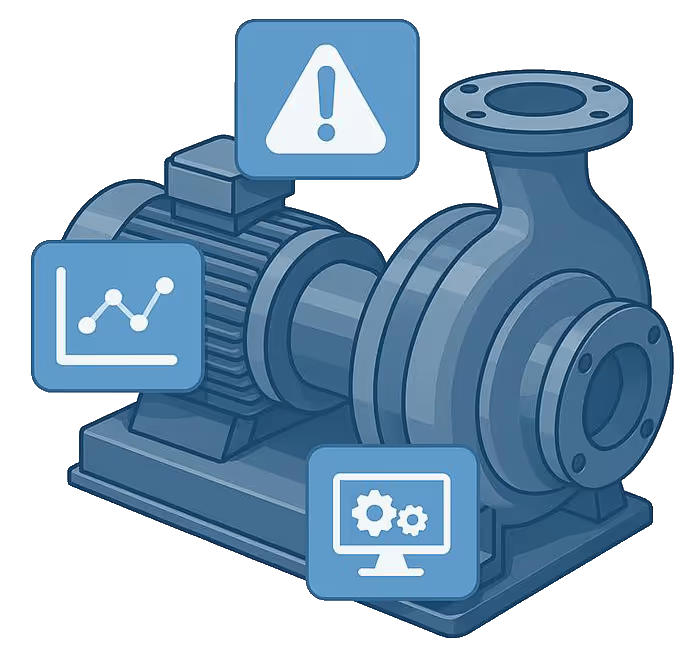
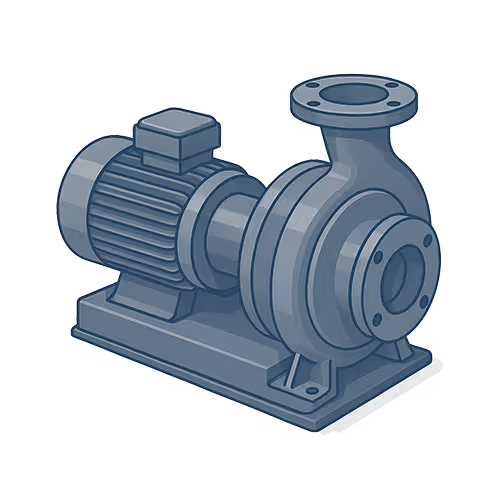
Centrifugal pump and their typical faults
Monitored parameter:
Vibration sensors on the bearing housing
Early warning signs:
Increased vibration amplitude
Unusual frequency peaks in the spectrum
Increase in vibrations in the higher frequency range
Typical faults:
Impeller imbalance
Shaft misalignment
Bearing wear
Loosening of components
Monitored parameter:
Temperature sensors (engine/bearing location)
Early warning signs:
Gradual increase in temperature
Local overheating on the bearing housing
Increasing temperature correlation with operating time
Typical faults:
Lubricant deficiency
Bearing friction
Inadequate cooling
Great, that worked!
Unfortunately, that didn't work out. Please check that all mandatory fields have been completed.
Centrifugal pumps and their typical faults
Monitored parameter:
Vibration sensors on the bearing housing
Early warning signs:
Increased vibration amplitude
Unusual frequency peaks in the spectrum
Increase in vibrations in the higher frequency range
Typical faults:
Impeller imbalance
Shaft misalignment
Bearing wear
Loosening of components
Monitored parameter:
Temperature sensors (engine/bearing location)
Early warning signs:
Gradual increase in temperature
Local overheating on the bearing housing
Increasing temperature correlation with operating time
Typical faults:
Lubricant deficiency
Bearing friction
Inadequate cooling
Super, das hat geklappt!
Das hat leider nicht geklappt. Bitte überprüfen Sie, ob alle Pflichtfelder ausgefüllt wurden.
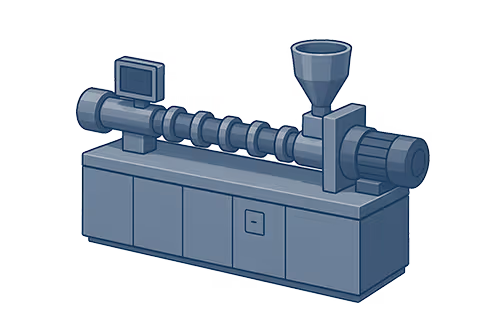
Extruders and their types of faults
Monitored parameter:
Speed of the worm shaft
Early warning signs:
Unstable or fluctuating speed
Increased control circuit work (frequent readjustment by frequency inverter/servo) → increasing resistance in the system
Typical faults:
Motor or gearbox damage
Screw and barrel wear
Material jam or incipient blockage.
Monitored parameter:
Temperature sensors in each heating zone of the barrel and in the mold
Early warning signs:
Increase in melt pressure despite correct cylinder temperatures
Slow or delayed heating phase of individual zones
Typical faults:
Heating element failure or uneven temperature
Melt pressure too high
Super, das hat geklappt!
Das hat leider nicht geklappt. Bitte überprüfen Sie, ob alle Pflichtfelder ausgefüllt wurden.
aiomatic
We identify faults before downtime occurs
We help industrial companies to avoid unplanned machine downtime. Our AI-powered software analyses sensor data such as temperature, vibration and pressure in real time and detect deviations before failures occur. This enables targeted maintenance, reduces costs and increases machine availability: easy to integrate, efficient and sustainable.
Not sure where to start?
In our free machine and use case analysis, we evaluate your potential for implementing Predictive Maintenance.