Predictive maintenance for conveyor belts and
conveyors units

Conveying systems keep your logistics and production processes running.
With AI-powered real-time analytics, you can detect wear and disruptions before they lead to downtime.
Predictive maintenance ensures smooth operations, reduces unplanned downtime of your conveyor belts and conveyor units, minimizes wasted resources and relieves your staff.
Start dashboard tour
Your software demo
Logo Hansaport
Petcom logo

These parameters should be monitored:

Icon Sensor
Vibration sensors at the gearbox bearing
(Early detection of bearing defects)
Icon Sensor
Temperature sensors on the motor and gearbox (Early detection of overheating)
Icon Sensor
Current monitoring on the drive motor (Blockage/overload detection)
Icon Sensor
Speed and torque
(Belt misalignment or increased rolling resistance)

Typical issues that occur in conveying systems

Belt wear due to abrasion or aging
Bearing damage on rollers or pulleys
Tracking and centering faults
Slippage on the drive pulley
Shaft failures

These industries benefit from monitoring conveying systems

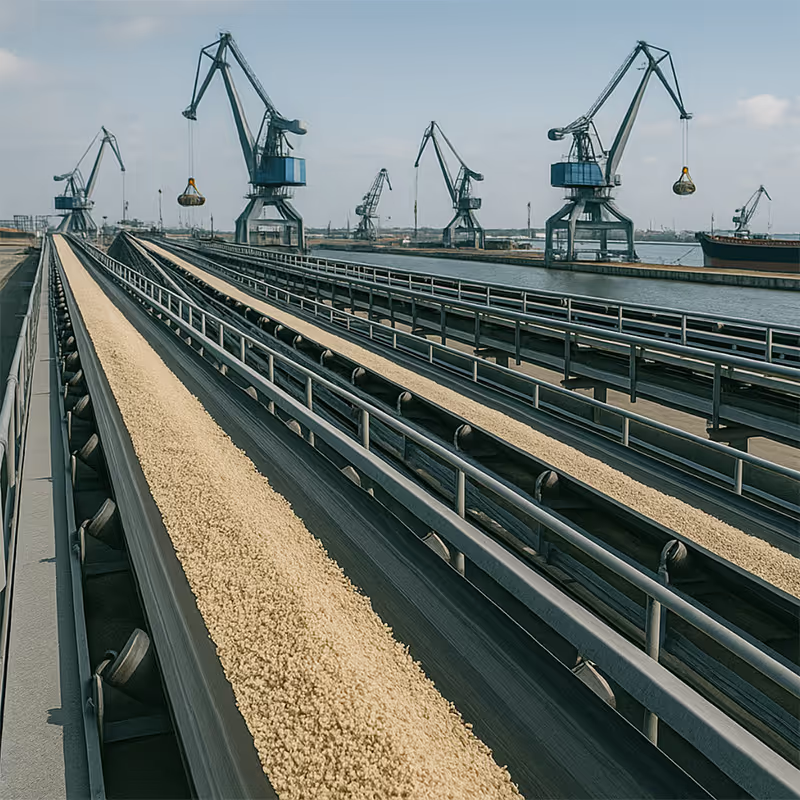
Conveyor belts in port logistics
Logistics
Conveyor belt in pharmaceutical industry
Pharmaceutical & chemical
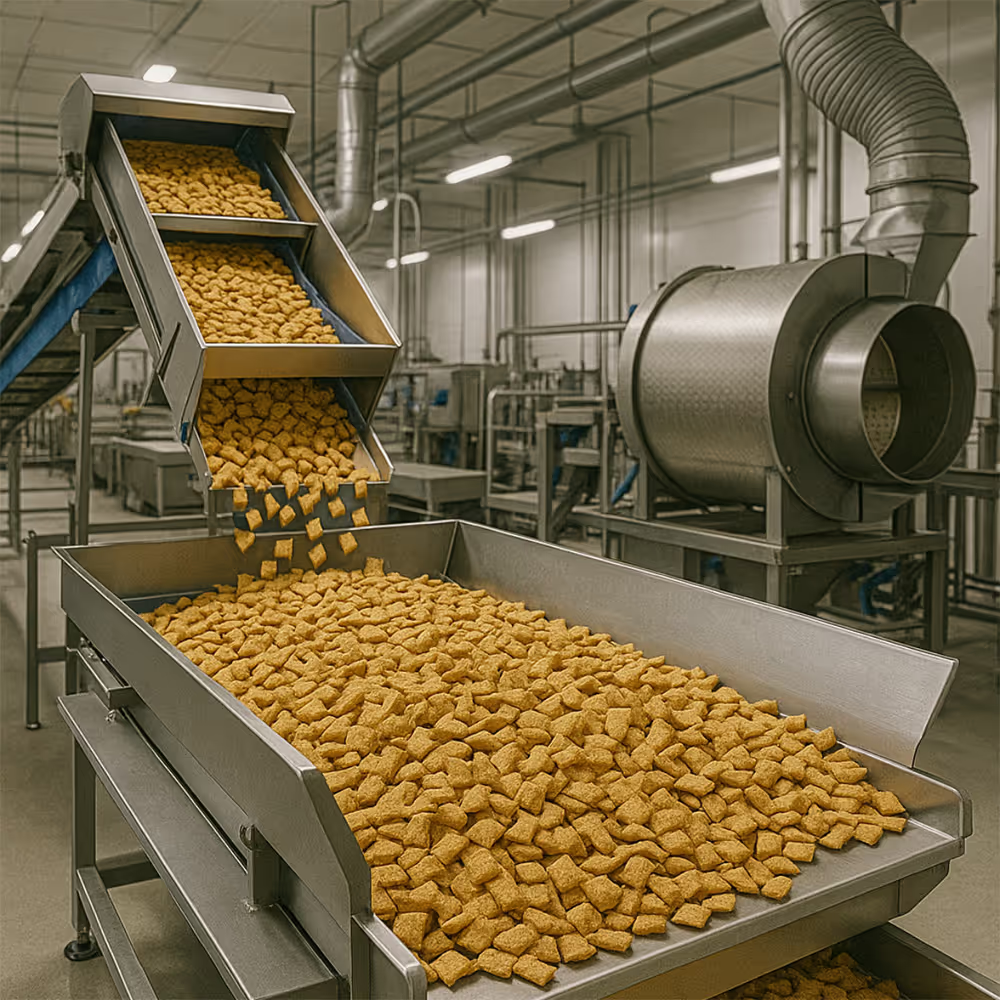
Conveyor unit in food production
Food & beverages
Conveyor belt in timber construction
Wood & furniture
Conveyor belt in the packaging industry
Packaging industry
Conveyor belt in open-cast mining
Mining & heavy industry
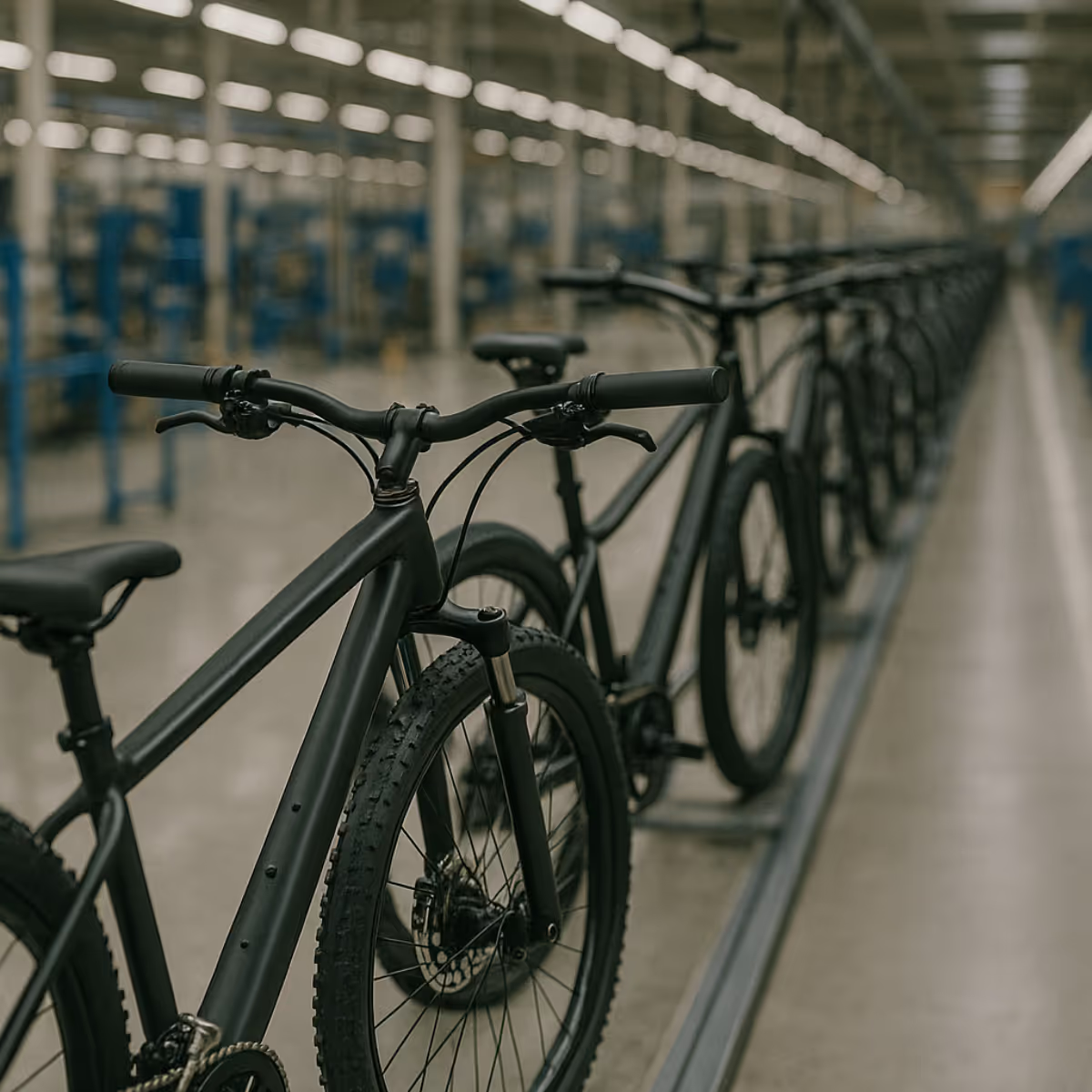
Conveyor belt in the mobility industry
Mobility industry
Conveyor belt in the recycling industry
Recycling & waste management

Use Case:
Business value through conveyor belt monitoring

Even a single identified anomaly makes it possible to prevent expensive downtimes at an early stage.

aiomatic detected a bearing damage at an early stage.
The o
utput was reduced to 50% over the weekend, allowing operations to continue.
The bearing replacement was carried out in the following week, preventing downtime of the conveyor belt.
Light bulb icon
The investment
€ 4,800
for monitoring one conveyor
belt with aiomatic
Icon Sensor
Light bulb icon
The savings
€ 15,150
by detecting just one anomaly with aiomatic
Webinar recording

Predictive maintenance for rotating machines

In this webinar, we will show you in a practical way how to introduce predictive maintenance in your company.Based on a specific use case, learn how to achieve a predictive maintenance strategy step by step with aiomatic.
Webinar cover photo with aiomatic

Which product is right solution for you?

Our unique selling points

Predictive maintenance for the industry

Production logic instead of a standard model

Identifies operating conditions, makes context-based decisions and provides clear anomaly explanations.

Fastest time
to value

Plug & Play, ready to use, continuous optimization and easy to scale.

Suitable for
different industries

Industry-, machine-
and manufacturer-independent.

FAQ: Predictive maintenance for conveyor belts and conveyor units

How can companies maximize the efficiency and lifetime of their conveyor belts / conveyor units through monitoring and maintenance?

By continuously capturing vibrations or temperatures, issues can be detected at an early stage. This allows maintenance teams to repair or replace only the components that are actually affected. As a result, the  life of cconveyor belts / conveyor units isareextended, production becomes more stable and predictable and maintenance effort and costs can be managed more efficiently.

What problems can occur during conveyor belts / conveyor units operation and how can they be resolved?

Common issues include misalignment of drive components, slippage, blockages, and wear of components such as ball bearings. aiomatic can detect these, for example, through changes in vibration patterns or increased temperature.

Common faults and possible corrective actions include: dirt buildup, improper loading, or worn idler rollers can lead to misalignment.

The affected component may need to be realigned or cleaned. In the case of slippage, belt tension often needs to be adjusted or the drive and return pulleys may need to be cleaned.

Material buildup often causes blockages. Chutes and transfer points should be inspected and cleaned.

aiomatic also detects wear. If anomalies occure, components may need to be replaced to prevent machine downtime.

How often should conveyor belts / conveyor units be maintained?

The frequency of inspections and maintenance depends on usage and the environmental conditions in which the conveyor belt / conveyor unit is operated. With predictive maintenance ther is no need for fixed intervals. The system detects deviations in machine behavior early and maintenance is only carried out when it is truly necessary. This helps avoid unnecessary costs, the preventive replacement of intact components and saves valuable working time.

What are signs that a conveyor belt / conveyor unit is not working properly?

Typical signs of anomalies include unusual noises, visible wear, or damage to the conveyor belts / conveyor units. These issues can disrupt the overall process, reduce productivity, and cause unplanned downtime. At the same time, there are changes in machine behavior that are not obvious, such as minimal vibrations, slight temperature deviations or wear developing in non-visible components. These are not easy to detect. This is where predictive maintenance helps: early and invisible deviations are detected based on data, enabling intervention before actual damage or downtime occurs.

What measures should be taken if a problem is detected on the conveyor belt / conveyor unit?

If a problem is detected, the appropriate response depends on the type and severity of the fault. Possible measures include readjusting belt tracking, removing deposits from rollers, adjusting belt tension or replacing worn or damaged components. Predictive maintenance provides targeted support: the system identifies early which components are affected, so maintenance can be carried out exactly where it is needed.
Employee of aiomatic in a machine room

Any further questions?

Our mechanical engineer Joel is happy to help you!