Predictive maintenance for pumps

Pumps keep your production and supply processes running.
AI-powered, real-time analysis enables the detection of anomalies at an early stage. This allows typical pump issues, such as cavitation, imbalance, incipient bearing and seal damage or hydraulic deviations, to be identified before they lead to unplanned downtime.
Start dashboard tour
Your software demo
Petcom logo

These parameters should be monitored:

Icon Sensor
Vibration sensors (bearing housing/shaft)
Icon Sensor
Pressure sensors (suction/pressure side)
Icon Sensor
Motor data
(power consumption)
Icon Sensor
Temperature sensors
(Bearing point)
Icon Sensor
Flow sensors
(flow rate monitoring)

Typical issues that occur at
pump systems

Impeller imbalance
Shaft misalignment
Lack of lubrication
Blockages
Clogged pipes or filters
Worn impellers  
Suction problems

These industries benefit from monitoring pumps

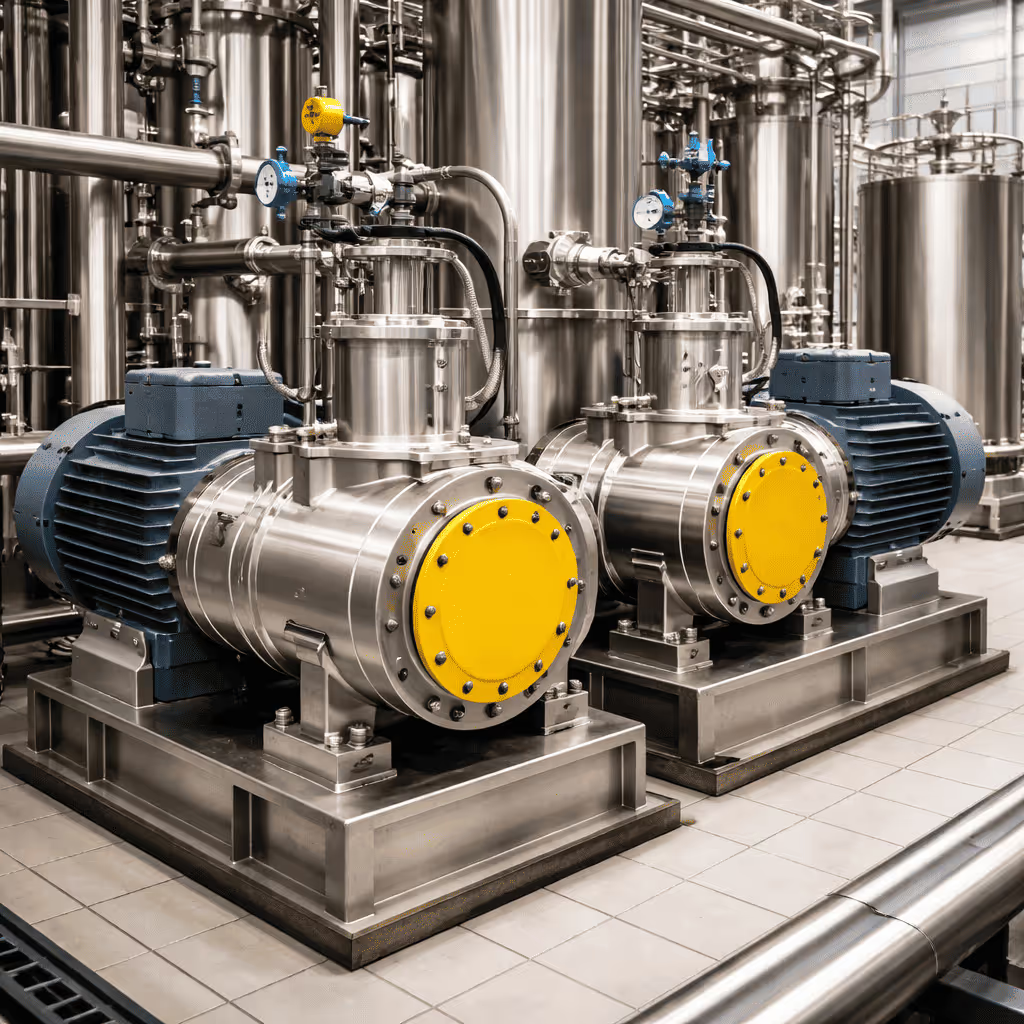
Pump in the chemical industry
Chemical & petrochemical industry
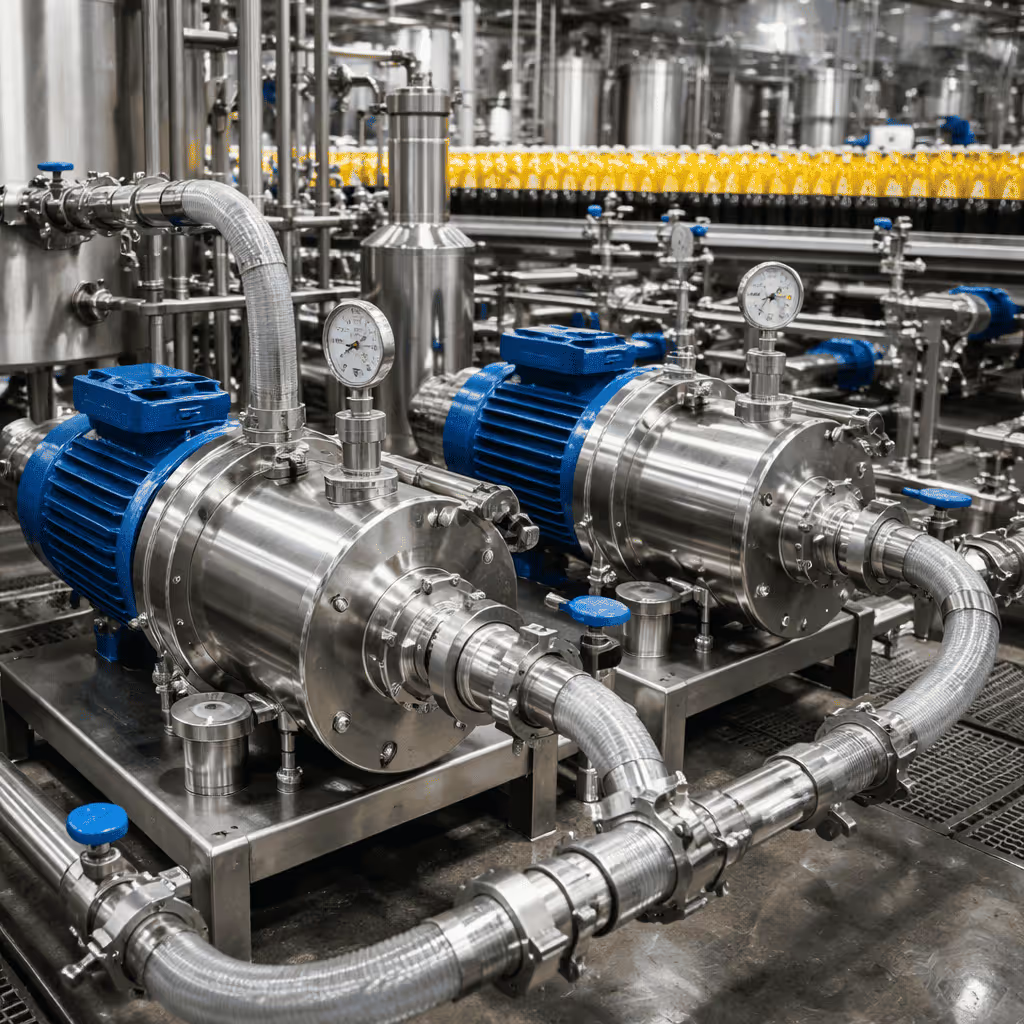
Pump in beverage production
Foods & beverages
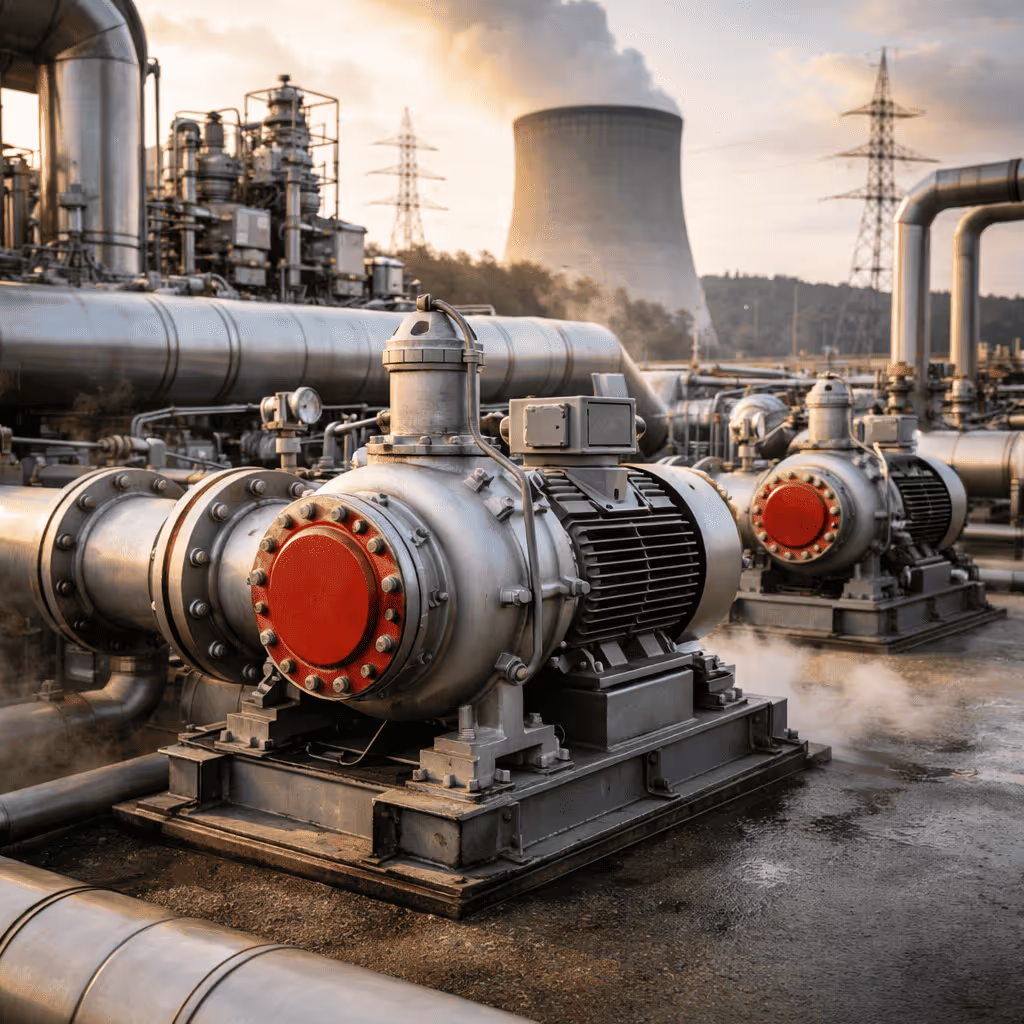
Pump at the energy supplier
Energy supplier
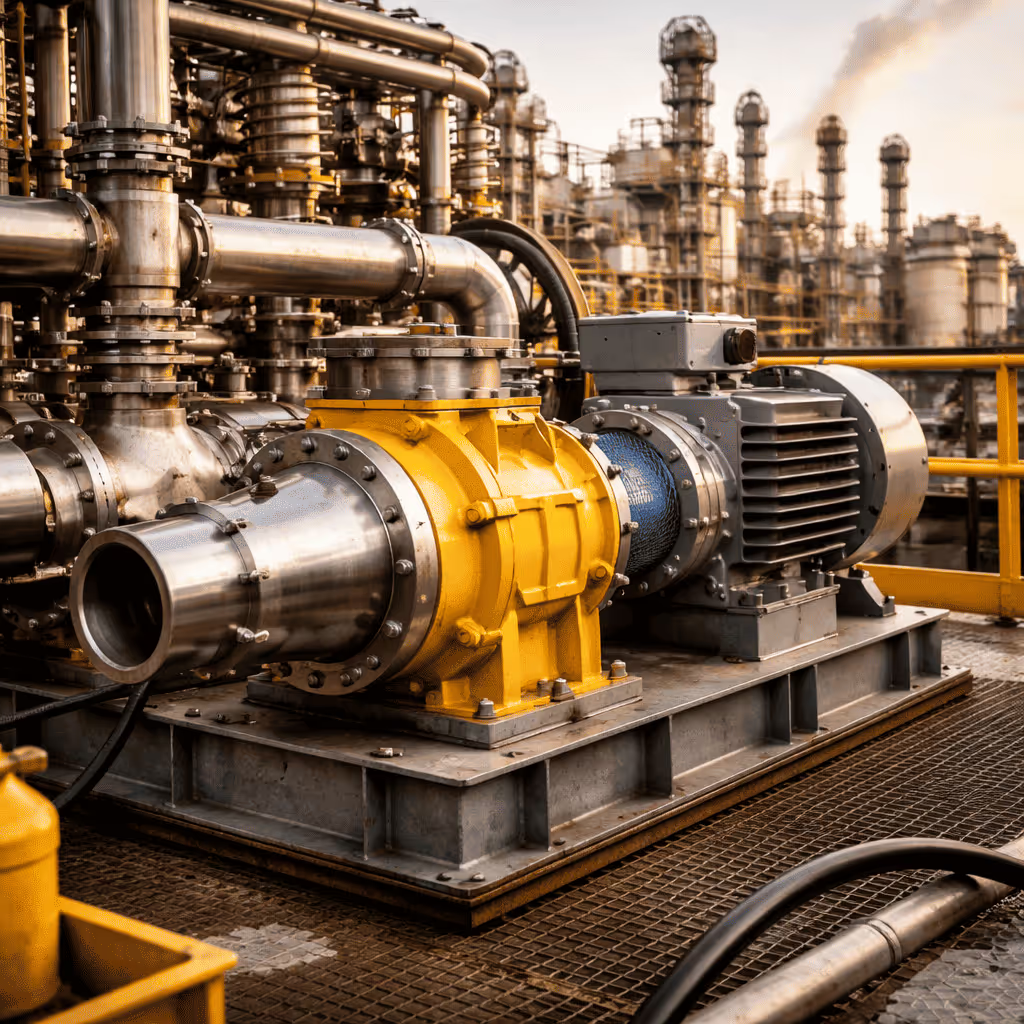
pump in the oil industry
Oil & gas industry
Pump in waste water technology
Water & sewage industry
Pump in process engineering
Process engineering & plant engineering
Around 20% of global electricity consumption is accounted for by pump systems.
Efficient solutions are a key factor in reducing CO₂ emissions.
* A comprehensive review on energy efficiency enhancement initiatives in centrifugal pumping systems (Applied Energy 2016)

Use Case:
Pumps in a combined heat and power plant.

Our client in the energy sector monitors its KSB pumps at the combined heat and power plant using aiomatic’s AI software. For example, by intelligently linking process and vibration data, wear can be detected at an early stage and thus creates transparency about energy consumption.
Early detection of anomalies through vibration analysis, efficiency monitoring, temperature analysis, pressure, flow and performance monitoring
Deterioration of bearing condition
Insufficient bearing lubrication
Control malfunction
Ineffective operation
Impeller imbalance due to deposits or damage

Which product is right solution for you?

Our unique selling points

Predictive maintenance for the industry

Production logic instead of standard model

Identifies operating conditions, makes context-based decisions, and provides clear anomaly explanations.

Fastest Ttime
to value

Ready to use,
continuous optimization and easy to scale.

Suitable for
different industries

Industry-, machine-
and manufacturer
independent.

FAQ: Predictive maintenance for pumps

What are the signs that my pump is about to break down or needs repairing?

Typical signs include unusual noises, changes in pressure readings or increased vibrations. With the right sensors, such changes can be detected at an early stage, before the machine breaks down.

Which pump types can be monitored (centrifugal pump, multi-stage, positive displacement pump)?

Predictive maintenance can be used for all types of pump. The ideal sensors and evaluations depend on the design, speed, application, and available process signals.

What data is required to start with pump monitoring?

Combining vibration data (e.g. from the bearing housing) with process data such as suction/discharge pressure, flow rate, temperature and motor power provides a solid foundation for diagnostics. Combining vibration and process data significantly improves the reliability of diagnostics.

Does the plant need to be shut down to implement predictive maintenance for the pumps?

Not necessarily. Many sensors can be retrofitted during scheduled maintenance periods. If sensors are already in place, the pump can continue to operate as normal.

What is the difference between pump monitoring and pure motor monitoring?

Pumps in particular benefit from the combination of mechanical vibrations and hydraulic process values. While pure motor monitoring recognises electrical and mechanical issues in the drive, it often fails to identify the hydraulic cause, such as cavitation, suction problems or blockages.

What are the benefits of predictive maintenance for pumps (ROI)?

Typical benefits include fewer unplanned downtimes, lower repair costs, better maintenance planning and energy savings.

Is predictive maintenance also recommended for smaller pumps?

Yes, predictive maintenance is also recommended for smaller pumps. The decisive factor is not the size of the pump, but its influence on your operation. If a failure causes downtime, affects the supply, or results in subsequent damage to the bearing, seal, or impeller, our AI-powered analyses provide early-stage transparency and enable maintenance to be planned.
Employee of aiomatic in a machine room

Any further questions?

Our mechanical engineer Joel is happy to help you!