Sign up for free and test all features of our software.
Great, that worked!
Unfortunately, that didn't work out. Please check that all mandatory fields have been completed.
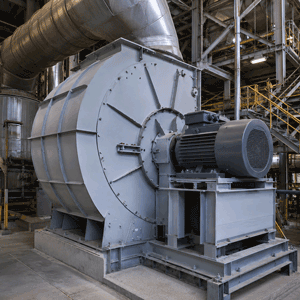
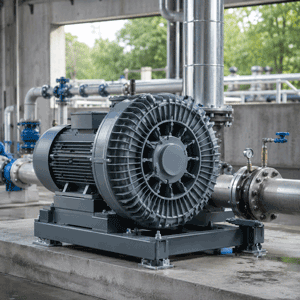
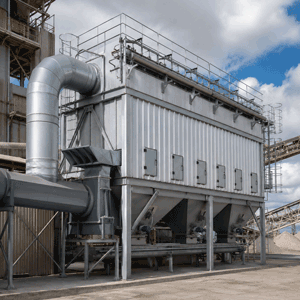
Predictive Maintenance for fans, blowers and filter systems
Fans, blowers and filter systems are central components in production and supply processes
Smooth operation ensures stable air volumes and pressure conditions, as well as reliable ventilation. Predictive maintenance prevents downtimes and increases your system availability.
Belt issues (slip, incorrect tension, belt misalignment)
Impeller imbalance
Blockage / contamination in the air path
Aerodynamic Instabilities
These industries benefit from AI-monitoring
Energy utilities & power plants
Mining industry
Water & Wastewater Management
Biotech & Pharma Industry
Chemical & petrochemical industry
Metal industry
Building materials industry
Paper & pulp industry
Practical example: Fans, blowers and filter systems in the industry
A production facility uses a central extraction and filtration system that reliably removes dust and fumes from multiple areas. The facility operates in shifts: a plant failure would quickly lead to production downtime or issues with occupational safety and compliance with emission limits.
Early detection of anomalies to prevent unplanned downtime:
Incipient bearing damage due to rising vibrations and temperature
Impeller imbalance due to buildup, indicated by increased vibration and higher power consumption
Belt slippage or drive issues due to deviations in speed and power consumption
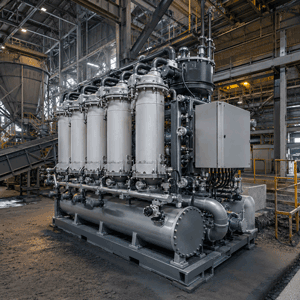
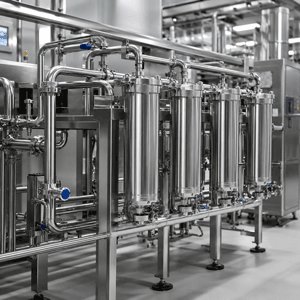
Filter clogging or increasing system resistance due to rising differential pressure and decreasing air performance
AI in a production context instead of rigid threshold values
Detection of different recipes and operating states
Implemented in just a few days without complex IT project
Easy scalability to additional assets
Manufacturer- independent and flexible to use
Suitable for standalone machines and complex production lines
FAQ: Predictive Maintenance for fans, blowers,and filter systems
What damage can Predictive Maintenance detect in fans, blowers, and filter systems?
Typical issues include bearing and gearbox damage, impeller imbalance, misalignments or coupling problems, belt slippage, and resonances in critical speed ranges.
Which sensors are needed for a successful start with Predictive Maintenance in fans, blowers, and filtration systems?
Vibrations at the bearing points are the most important signal. Temperature at the motor/bearing/gearbox, as well as current or power at the drive and speed as contextual signals, can further improve monitoring.
Where should sensors be mounted on fans, blowers, and filtration systems?
Vibration sensors are ideally mounted as close as possible to the bearing housings. For example, on the motor bearing, the fan bearing, and, if present, additionally on the gearbox. Temperature sensors are placed on the motor housing and the bearing housing, and if necessary, on the gearbox or for monitoring oil temperature.
How are changing operating conditions (speed control, dampers, load changes) handled in fans, blowers, and filtration systems?
The evaluation is specific to the operating-point dependent: different operating points are learned and compared separately to ensure anomaly detection remains stable and prevent false notifications.
Can Predictive Maintenance detect blockages or clogged filters in fans, blowers, and filtration systems?
Yes. For example, clogged filters or blockages often manifest as an increasing current or power consumption at the same speed. Particularly reliable detection is improved if, in addition, the Differential pressure across the filter is monitored.
What are the typical benefits of Predictive Maintenance for fans, blowers, and filtration systems?
Predictive Maintenance reduces unplanned outages and thus costly downtimes. If exhaust air, extraction, or filtration systems do not run reliably, this can quickly lead to downtimes in connected or downstream systems. Additionally, consequential damage to bearings, gears, or impellers can be avoided.
Not sure where to start?
In our free machine and use case analysis, we evaluate your potential for implementing Predictive Maintenance.