Sign up for free and test all features of our software.
Great, that worked!
Unfortunately, that didn't work out. Please check that all mandatory fields have been completed.
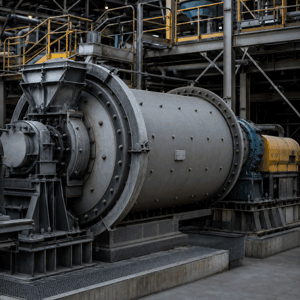
Predictive maintenance for mills
Mills keep your production and supply processes running.
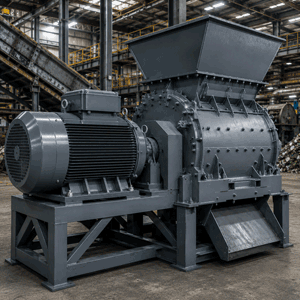
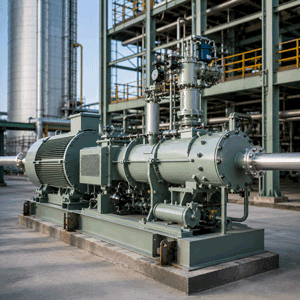
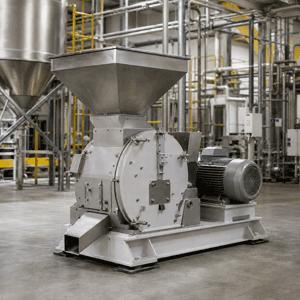
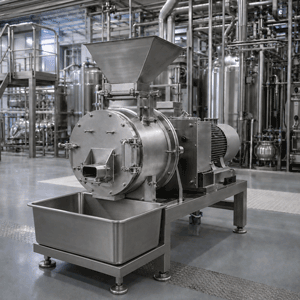
Mills play a central role in many production processes. Even the smallest deviations in operating behavior can lead to significant efficiency losses or unplanned downtime.
With predictive maintenance, such changes in the operating behaviour of mills can be detected early. They can also be precisely assessed before a failure occurs.
In feed production, hammer mills are a central component of stable and efficient production processes. Due to continuous operation and high mechanical stress, deviations in machine behavior can gradually develop. If these changes are detected early, unplanned downtimes, quality issues, and consequential damages can be avoided.
Early detection of anomalies, for example through vibration or temperature analysis, to prevent unplanned downtime:
AI in a production context instead of rigid threshold values
Detection of different recipes and operating states
Implemented in just a few days without complex IT project
Easy scalability to additional assets
Manufacturer- independent and flexible to use
Suitable for standalone machines and complex production lines
FAQ: Predictive maintenance for mills
How can companies maximize the efficiency and service life of their mills with predictive maintenance?
By continuously collecting data such as vibrations, temperatures and drive data, anomalies are detected at an early stage. This means that only the actually affected components are maintained or replaced. This extends the maintenance intervals of the mill, makes production more predictable and reduces maintenance effort and costs.
What problems can occur during mill operation and how can they be detected?
Common problems include imbalance, bearing and gearbox wear, overheating or blockages caused by material accumulation. These can be detected, for example, through changes in vibration patterns, temperature trends or anomalies in current consumption and torque.
How often should mills be maintained?
The maintenance frequency depends on usage, material and environmental conditions. With predictive maintenance, maintenance is no longer based solely on fixed intervals, but increasingly on actual demand: action is taken when data indicates deviations. This reduces unnecessary maintenance and prevents unplanned downtime.
What are typical signs that a mill is not working properly?
Typical signs include unusual noises, increased temperatures or visible wear. Many anomalies develop gradually: minimal vibrations, slight temperature deviations or increasing energy demand cannot be detected by the human eye. Predictive maintenance makes these changes visible at an early stage.
Which types of mills are suitable for predictive maintenance?
In principle, many types of mills can benefit from predictive maintenance. It is especially useful where failures cause high costs, such as in critical process steps or where restart times are long.
Is predictive maintenance also worthwhile for older mills?
Yes. The benefits are particularly high for older assets, as spare parts and expertise are often scarce and unplanned downtime can become expensive. Retrofit sensor technology quickly creates transparency without requiring the entire asset to be modernized.
Not sure where to start?
In our free machine and use case analysis, we evaluate your potential for implementing Predictive Maintenance.