Sign up for free and test all features of our software.
Great, that worked!
Unfortunately, that didn't work out. Please check that all mandatory fields have been completed.
Predictive Maintenance for compressors
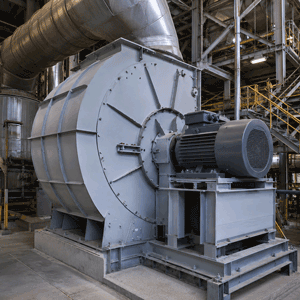
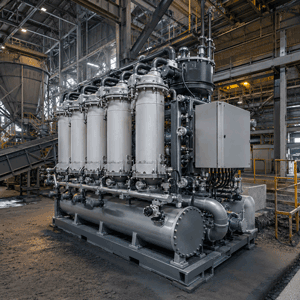
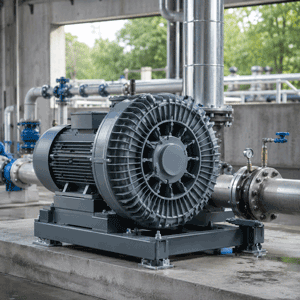
Compressors ensure the supply of process gas and compressed air, and thus the availability of your production.
Compressors are among the most important and, at the same time, most energy-intensive assets in industry. They supply production processes with compressed air or process gases. Even small deviations in operating behavior can lead to unplanned downtime.
With predictive maintenance, changes in the operating behavior of compressors can be detected early and precisely assessed before failures or costly consequential damage occur.
Temperature (bearings, motor, oil circuit, compressor stages)
Current and power Consumption (main drive)
Differntial pressure and pressure values
Typical issues that occur at compressors
Coupling misalignment
Imbalances in rotating components
Bearing and gearbox wear
Valve and seal problems
Leaks and compressed air losses
Overheating due to lubrication or cooling problems
These industries benefit from compressor monitoring
Mining, raw material & mineral Processing
Energy generation & utilities
Food & animal feed industry
Chemical & pharmaceutical industry
Mechanical & plant engineering
Automotive industry
Paper industry
Recycling industry
Case Study: Turbogas compressor in the energy sector
Turbine gas compressors are used by an energy infrastructure operator to inject gas into underground storage facilities. The aim is to ensure a reliable gas supply in Germany. Continuous monitoring is therefore crucial for detecting changes in machine behaviour at an early stage, assessing risks in good time and taking targeted maintenance measures.
Anomalies that can be detected early, for example through vibration or temperature analysis, to prevent unplanned downtime:
AI in a production context instead of rigid threshold values
Detection of different recipes and operating states
Implemented in just a few days without complex IT project
Easy scalability to additional assets
Manufacturer- independent and flexible to use
Suitable for standalone machines and complex production lines
FAQ: Predictive maintenance for compressors
What are the benefits of predictive maintenance for compressors?
Continuous condition monitoring detects changes at an early stage, allowing maintenance to be carried out based on actual demand. This reduces unplanned downtime, minimizes consequential damage and increases the availability of the compressed air or process gas supply.
How can bearing or gearbox problems in compressors be detected early?
Typical signs include changes in vibration behavior, rising temperatures or increased power consumption under the same load. The analysis of this data enables an early and reliable assessment of the asset condition.
Is Predictive Maintenance also useful for older compressors?
Yes. Especially for existing assets, the potential is often particularly high. Modern retrofit sensor technology can usually be installed without extensive modifications and quickly creates transparency about the actual condition of the asset.
Do compressors need to be shut down for installation?
In many cases, a large part of the sensor technology can be installed during planned maintenance windows or short production interruptions. The exact effort depends on the compressor type, accessibility and the respective safety requirements.
Which types of compressors are suitable for predictive maintenance?
Predictive maintenance is generally suitable for many compressor types, including screw, piston and turbo compressors. Monitoring is particularly economical for critical assets whose failure would cause high costs or production interruptions.
What savings potential results from monitoring compressors?
In addition to preventing unplanned downtime, companies can also reduce their energy consumption. Early-detected leaks, signs of wear or inefficient operating states help operate the compressed air and process gas supply more economically and resource-efficiently.
Not sure where to start?
In our free machine and use case analysis, we evaluate your potential for implementing Predictive Maintenance.